South West Public Health Observatory



|
South West Public Health Observatory
|
|
| Teenage parents and housing need: a review of need and availability in the South West | |
Foreword and Background
Foreword
The quality of housing during early childhood is an important determinant of future health. This report highlights the specific housing needs of teenage parents, how they can be assessed and how they can be met. As the report shows, the challenges facing teenage parents are multiple and multi-dimensional. Our understanding of how advantages and disadvantages are interconnected and accumulate over a person's life course means that it is crucial that all opportunities are taken to give young parents and their children the best start in life. We hope that this report will further understanding of this complex issue, and that it will also act as a catalyst to future joined-up working between those involved in the care and support of teenage parents.Julia Verne
Director, South West Public Health Observatory
This is a practical toolkit commissioned by South West Regional Public Health Group, to assist Local Teenage Pregnancy Partnerships Boards to assess the housing provision of Teenage Parents. It will offer support to the Office of Deputy Prime Minister target:
By 2003, all under-18 lone teenage parents who cannot live with their family or a partner should be placed in supervised semi-independent housing with support, and not be living alone and unsupported.
The background of this report highlights the importance of reducing further social exclusion for teenage parents by appropriate support. Childcare is often a barrier for teenage parents into education, training and employment. The Care to Learn package is now offered to 16 year olds and over (and in 2004 will be available to under 16s) to reduce further social exclusion. With appropriate supported housing, childcare and education opportunities this will benefit young families.
This toolkit will be used by a range of professionals who are in contact with young parents ranging from housing workers, Connexions Personal Advisors and Health Visitors. It is important that this is agreed locally to avoid confusion and duplication of work. It includes a practical guide to assessing need by:
¡ using information on the number of births to teenagers aged 15–17 years old at the local level;
¡ combining this with the appropriate population data to estimate the number of births over the last three years to mothers aged 15–17 years old;
¡ comparing this total of teenage mothers with the availability of supported housing.
The data will then need to be shared with the Teenage Pregnancy Partnership Boards, Housing Departments, Community and Voluntary Sector working in Housing and the local Children and Young People's Strategic Partnership Board.
The South West has shared this toolkit with other regions in order to share good practice.
Jennie Harmston
Regional Teenage Pregnancy CoordinatorWho this report is for
This report is for all those whose work relates to teenage pregnancy and teenage parents and their children. This will include local and regional teenage pregnancy coordinators, health visitors, midwives, Connexions advisors and local authority housing officers. It will also be informative for housing advisors, public health specialists, GPs and social workers, as well as those working on projects such as Health Action Zones and Sure Start areas.
What the report is forThe toolkit component of the report is primarily intended for local teenage pregnancy coordinators (LTPCs). The format of the toolkit is intended to be suggestive rather than prescriptive – the toolkit offers a possible method for LTPCs to assess and monitor the housing needs of teenage parents. Individual LTPCs should adopt and amend the toolkit as they see fit, in the light of the situation in their area. For instance, where Connexions advisors have been suggested for the data collection section, health visitors could be used instead. The aim is that however it is utilised the toolkit will put the issue of housing for teenage parents on the practice agenda, and that informed evaluation and assessment will lead to better provision of services where need exists.
1 Background 1.1 Teenage pregnancy
International comparisons show that England has the highest rate of teenage pregnancy in Western Europe, with an estimated 90,000 teenagers under 20, and 8,000 under 16, becoming pregnant each year (SEU 1999). However, this figure is exceeded by the rates of some Eastern European countries (Dawson and Meadows 2001), and other English speaking countries, in particular the US. What is notable about the UK is that whilst in Western Europe rates have declined over the last two decades, and more recently they have begun to fall in the US, in the mid 1990s UK rates of teenage pregnancy were rising (Kiernan 1995; SEU 1999). However, the most recent statistics show that the rate of teenage pregnancy in England and Wales has fallen for three years in a row. Between 2000 and 2001 teenage conception rates for under-18s fell by 1% (National Statistics, 2003).
In the South West rates have been lower compared to most other regions (SWPHO 2001a). Comparison of 1998 and 1999 data for the South West region indicated a small decline for those under 18, although for those under 16 the trend varies across local authorities (SWPHO 2001b). Table 1 presents the latest data available; for the South West region, the conception rate rose slightly from 36.3 per 1,000 in 2000 to 36.8 per 1,000 in 2001. However, due to the abortion rate rising, the rate of births to teenagers fell from 20.1 to 19.9.
See here for reports and data on trends in teenage pregnancy in the South West.
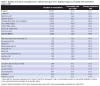
Table 1: Number and rate of conceptions per 1,000 women aged 15-17, England, regions and within the South Werst Region, 2001.While there may have been some fluctuations in the rates of teenage pregnancy in England it retains its association with conditions of poverty and social exclusion, and thereby with potential adverse health effects. Those who experience poverty and social exclusion, and those who live in deprived areas, are far more likely than more advantaged young people to become teenage parents. Research has demonstrated, for example, the probability of becoming a teenage parent is far higher for those who live in social housing, or for those who come from disadvantaged socio-economic backgrounds (Botting et al. 1998; Kiernan 1995). One study of young people leaving care found that almost half became mothers within the first two years of leaving care (Biehal et al. 1995). Low educational attainment is also a key factor that has been found to be associated with teenage parenthood (Kiernan 1995). There is thus firm evidence that poverty often precedes teenage parenthood.
Whether teenage motherhood in itself leads to social exclusion and adverse health outcomes remains uncertain, however. Hobcraft and Kiernan (2001) argue that both childhood poverty and early motherhood cause social exclusion in adult life, although early motherhood has a greater impact. However, by early motherhood they mean motherhood before the age of 23, and hence their findings are not specific to teenage motherhood. Others argue that poverty is the primary causal factor, and that most girls that become teenage mothers would have been poor whether or not they delayed their motherhood (Luker 1996; Phoenix 1991). Similarly, the evidence is contradictory regarding whether it is age or socio-economic conditions that cause the adverse pregnancy outcomes and adverse health outcomes for teenage mothers and their children that have been observed in some studies (Fraser et al. 1995; Geronimus 1996). An important question thus remains as to whether teenage pregnancy per se rather than socio-economic conditions should be regarded as the central problem, or whether policy should be aimed at fostering socio-economic and cultural conditions whereby all women, irrespective of their age and their socio-economic background, would not be disadvantaged as a result of becoming mothers (Lawlor and Shaw 2002a; 2002b; Phoenix 1991). Debates as to 'cause and effect' aside, supporting teenage parents in a social and material sense is a clear and urgent policy imperative, and tackling the issue of housing need is one of the ways in which this can be achieved.
1.2 Policy contextWhile the issue of teenage pregnancy was introduced into the policy agenda via the 1992 Health of the Nation report (DoH), it was through the Social Exclusion Unit report of 1999 that the link between teenage pregnancy and social exclusion became more explicit (SEU, 1999). This report identifies two main goals: to halve teenage pregnancy rates for under 18s by 2010, and to reduce teenage parents' risk of social exclusion by supporting their participation into education, training and employment. A cross-departmental ministerial force, an independent advisory group and an implementation unit based within the Department of Health – the Teenage Pregnancy Unit (TPU) – were set up in September 1999 to co-ordinate national, regional and local action. Local co-ordinators were jointly appointed by local and health authorities to monitor and audit services and to support and co-ordinate local action.
The SEU identifies teenage parents' housing need as a key action area. Action point 29 in the Teenage Pregnancy report states that by 2003 all lone teenage parents under 18, who cannot live with either family or a partner, should be accommodated in supervised semi-independent housing. Although no legislative change was required the Department of Transport, Local Government and the Regions (DTLR) amended the Code of Guidance on Allocation of Housing and Homelessness, and subsequently required local authorities to audit housing need and existing provision. The housing investment plans of local authorities must reflect this national policy and have a strategy for teenage parents. Housing related support is to be made available to those living in private rented accommodation, via the housing benefit route.
The SEU housing policy runs parallel to, and is reinforced by, the Supporting People Programme (DETR 2001). The programme's main objectives are to improve the quality and extend the provision of housing related support services for a number of vulnerable social groups. Although not listed as a 'key group' teenage parents are identified as one of these groups of people in need of support. In preparation for the Supporting People Programme a structured and comprehensive audit of need and existing provision was to be undertaken by local authorities using a common methodology. Local authorities would be in charge of developing and managing the Supporting People strategy in partnership with health and probation services, which will be in place by April 2003. As with their housing investment plans, the LA plans for Supporting People have to demonstrate that provision will meet the requirements of SEU action point 29.
Research carried out during 2001 found that progress has been slow (Hinton and Gorton 2001). However in September 2001 the TPU and DTLR issued guidelines for good practice in the development of supported housing (TPU and DTLR 2001). The DETR and Housing Corporation had piloted different models of supported housing for teenage parents from the summer of 1999. Information on the availability of supported housing as of April 2001 indicated that 2,000 more units across England would be needed to meet the 2003 requirement (DoH 2002). Funding for new projects has been made available via the Housing Corporation and the Safer Communities Supported Housing Fund. From 2003 all revenue funding streams will be consolidated under the Supporting People Grant, which will be administered by local authorities.
In addition teenage parents are also covered by legislation and guidelines on homelessness, young people and children in care. The provision of supported housing for teenage parents is affected by the new Homelessness Act 2002, which introduces a requirement for local authorities to conduct a homelessness review (National Housing Federation 2002). Furthermore, the Act amended the Housing Act of 1996, removing the temporary duty to house people for two years only. Under the new Act teenage parents defined as being 'statutory homeless' will have a right to a permanent tenancy. The DTLR (2002) report on homelessness made an explicit link between homelessness and teenage pregnancy and highlights the SEU action plan in relation to supported housing. The current housing investment programme guidance urges local authorities to pay particular attention to 16 and 17 year olds with little support, care leavers and lone teenage parents (DTLR 2001). Under the Children (Leaving Care) Act (2000) there is a duty for a personal adviser is to be appointed by social services to support care leavers until they are 18 and to stay in touch with them until they reach the age of 21. The Department of Health guidance additionally recommends that housing and social services should work in partnership to support care leavers (Smith-Bowers 2002).
This brief introduction to the policy context of teenage parents and housing need indicates the cross-cutting nature of the issues and the range of agencies that will be involved (see Box 1 for policy documents available online). Local authorities have a strategic role in the allocation of social housing, in the management of the Supporting People strategy and funding, and in the homelessness and care leavers strategies. Thus a multi-agency collaboration between TPU local co-ordinators, local authorities' Supporting People teams, housing and social services departments, as well as representatives from pubic health, is vital for the successful implementation of the SEU policy.
1.3 Teenage parents and housing need
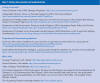
Box 1: Policy documents and website linksPregnancy alters teenagers' need for housing whether they are in care, living with parents, partners, or living on their own. A study by Allen et al (1998) has investigated teenage mothers' decision making about housing and living arrangements. They found that amongst those they interviewed 77% moved within the first year of their child's birth and 17% moved three times or more; some moved up to 11 times. Around one third were cohabiting with a partner at the time of pregnancy and one third were cohabiting one year after the birth of their child (18% with a husband). However, half of the original cohabitating relationships had broken down by this time. The SEU reports found that 7 out of 10 teenage parents aged 15–16, and half of those aged 17–18, live with their parents (SEU 1999). In Allen et al's study a year after birth the proportion of teenage mothers under 20 who were living with parent(s) dropped from a half (at the time of pregnancy) to a quarter, whilst the proportion of those living alone had risen from 7 to 29%. Amongst those who remained with parents many were satisfied with their housing situation, as co-residence is characterised by practical and financial support. However, most had thought about moving to set up their own household in order to have privacy and independence.
Other studies also confirm these to be key reasons as to why teenagers leave the parental home after the birth of their baby. Also, when the baby arrives, overcrowding, lack of space and privacy can take their toll on grandparents and other siblings; unforeseen conflicts and tension can arise (Allen et al, 1998; Burghes and Brown, 1995; Speak et al, 1995; Simms and Smith, 1986). Yet for many, family support continues even when they have left the family home and teenagers who live independently may continue to spend a considerable amount of time at their parents' homes. Availability of housing within proximity to their family is thus crucial (Smith-Bowers 2002; Speak et al, 1995).
Despite the fact that in the early 1990s some politicians and policy makers assumed that teenage mothers become pregnant deliberately in order to live off benefits and for the specific purpose of getting a council flat, the evidence shows that, at time of becoming pregnant and also afterwards, teenage mothers are largely unaware of benefit and housing regulations (Allen et al., 1998; Speak et al, 1995). In reference to the issue of the reliance on the welfare state, Allen et al (1998) found that of their sample almost all received social assistance and almost half received housing benefit. Seven per cent had been living in local authority housing when they became pregnant. One year after the birth this had risen to a third, and a further third were on a waiting list. Of those on a waiting list, two thirds had been waiting for a year. Becoming a teenage parent is thus hardly a fast-track to social housing. This research also revealed that social housing for this group was not a matter of passively subscribing to a culture of dependency – for many teenage mothers social housing was a route to independence. In addition a social housing tenancy may be an actively sought solution to unstable, violent relationships with partners and/or conflict with parents.
Access to social housing is not straightforward and the position of teenage mothers living with family is ambiguous. Unlike those young women who have been in care, they have to prove their unintentional and genuine homelessness to be categorised as qualifying as a statutory homeless priority (Corlyon and McGuire, 1999). This may involve having their families writing an 'eviction' letter, a difficult process that can be fraught with relationship conflict and counterproductive to prospects of on-going family support (Giullari, 2002; Simms and Smith, 1986). In some local authorities those who are under the age of 18 are unable to put their name on the housing register, and many have to wait around two years to be housed via this route (Burghes and Brown, 1995; Institute of Housing, 1993).
Many of those who are housed via the homelessness route, both care leavers and non-care leavers, have to live in temporary accommodation before obtaining their own tenancy. Temporary accommodation, bed and breakfast 'hotels' and hostels, are often unsuitable for children and the accommodation can be of poor quality and even dangerous (Corlyon and McGuire, 1999; Institute for Housing, 1993; Simms and Smith, 1986). Equally negative are the housing experiences of those who start off by living on their own in privately rented accommodation, or who move into such housing whilst waiting for social housing. High costs, poor conditions and unsuitability mean that these mothers are far more likely to move frequently before finding a permanent and adequate home (Allen et al, 1998; Simms and Smith, 1986).
Despite the fact that social housing often brings autonomy and a solution to relationship conflict, it is also the case that many teenage parents living in this sector experience bad housing conditions and live in deprived and unsafe neighbourhoods (Allen et al, 1998; Corlyon and McGuire, 1999; Speak et al, 1995). Partly as a result of trying to speed up the process of attaining independent housing they can sometimes accept unsatisfactory housing in place of waiting for a longer period. They often find it difficult to furnish their own homes even to a minimum standard, some get into debt, others live with inadequate facilities (Speak et al, 1995). Furthermore, many are housed far away from their families, care homes or other support agencies. They often have no car or telephone and cannot afford bus fares. Thus many live in isolation and boredom, and feel unsafe – experiences that are aggravated for those living in rural areas (Allen et al, 1998; Smith-Bowers 2002; Speak et al, 1995). In Supporting Families (Home Office 1998) the importance of proximity to the wider family in the allocation of housing to families was stressed and guidance for local authorities was specified.
1.4 Supported housingProblems of isolation, lack of support and safety were first addressed by Speak et al (1995) in their study of teenage mothers in Newcastle, and are confirmed in more recent studies using focus groups with teenage mothers, some of whom were former residents of supported housing projects. Smith-Bowers (2002) study in Buckinghamshire found that safety, security and good quality accommodation were teenage mothers' priorities. Proximity to family also ranked highly, as many mothers experienced very little support and poor treatment by statutory agencies, and were isolated due to high transport costs. Most of them wanted their own tenancy and believed they had the capacity to manage independent living and motherhood. They felt that age should not determine whether they were considered to be able to live independently or not. They also felt that in order to manage independent living they needed good quality and safe accommodation – they felt that temporary hostels were unsafe and unsuitable for their children. The young mothers also believed that good quality and safe independent accommodation with floating support was necessary for those who felt ready. Sharing with other young mothers in self-contained units with communal areas was their preferred model of supported housing. Most objected to communal living or foster care.
Hinton and Gorton's (2001) study of the different kind of supported housing available and examples of good practice reported that what young mothers wanted was choice. They conclude that age in itself is not a valid criterion for allocating different types of housing and recommend that a diversity of models be provided at the local level (see Box 2). Corlyon and McGuire (1999) also stressed the problems of those under 16, particularly those that have been in care, as many shared projects do not accept them. Although foster care is perhaps most suited to those who have been in care – as it provides a model of good parenting, emotional support and childcare – it may not be suitable for all and it is also very difficult to recruit foster parents for teenage mothers. Also Smith-Bowers (2002) found that mothers objected to foster care. Meeting a mixture of needs with a range and choice of provision is thus a challenging issue.
DoH-TPU guidelines for good practice stress the importance of not excluding those who are most vulnerable. Housing those with additional needs (e.g. drug users) amongst those with medium level needs, however, can cause tensions, conflict and stigma. It can lead to communal schemes having a poor reputation, and adds to the negative perception of the traditional mother and baby unit that many young mothers still hold. This impacts negatively on the willingness on behalf mothers to receive support and to live in supported housing (Hinton and Gorton 2001). The issue of meeting a variety of levels of need thus has to be addressed and plans for provision will need to take this into account and work in partnership with the relevant agencies (Hinton and Gorton 2001).
|
Box 2:. Housing models for teenage mothers (all ages)
INDEPENDENT HOUSING
FLOATING SUPPORT
INDEPENDENT HOUSING COMPLEX WITH RESOURCE BASE ON SITE
SELF-CONTAINED UNIT WITH ACCESS TO COMMUNAL AREAS
SUPPORTED HOUSING – SHARED FACILITIES
FOSTER CARE
|
|
Box 2:. Housing models for teenage mothers (all ages)
INDEPENDENT HOUSING
FLOATING SUPPORT
INDEPENDENT HOUSING COMPLEX WITH RESOURCE BASE ON SITE
SELF-CONTAINED UNIT WITH ACCESS TO COMMUNAL AREAS
SUPPORTED HOUSING – SHARED FACILITIES
FOSTER CARE
|
There are a number of delicate balances between the advantages and disadvantages that characterise different models of supported housing. Perhaps most notably, there is a tension between the provision of support and the respect for privacy – support should foster rather then undermine empowerment and independence. Although it is important to offer opportunities to learn independent living skills, for example parenting courses and access to other agencies that provide support, too much pressure and interference can lead young mothers to be discouraged from learning. User involvement in the development of opportunities is thus strongly recommended.
Childcare is a key need, and should be provided so that mothers can have a break and socialise (Hinton and Gorton 2001). This is especially important for those who have been in care and do not have family members to rely on for childcare (Corlyon and McGuire 1999). Furthermore, although one study found that mothers were interested in opportunities for education and training, these were not a key priority as they viewed being a mother as a positive, full time occupation (Smith-Bowers 2002).
A key issue that a number of studies have raised is that of the role of providers in relation to the involvement of the fathers of the babies. Benefit regulations, such as the cohabitation rules which will affect the mothers' benefits if the fathers stays more than two nights a week, need to be observed by support staff to prevent teenage mothers from loosing their benefits. There is also a safety issue – some of the women want protection from abusive fathers and families. For others, restrictions on the number of visits gives them more autonomy and confidence in the relationship. If there are no regulations on the number and duration of visits this can cause friction amongst residents who share facilities. However, strict rules on visiting and overnight stays may prevent fathers' involvement in the care of their child and causes friction amongst those who want to live as a family unit or engage in joint parenting. Regulations can also cause conflict amongst residents and staff. Most schemes catering for lone teenage mothers do not allow overnight stays (Hinton and Gorton, 2001). The issue of proximity further complicates this, as it is almost impossible to provide shared supported accommodation that enables all residents to be close to family or partners, particularly in rural areas. Flexibility and diversity of provision is thus recommended.
Another key issue relating to the balance between support, sharing and independent living is the problem of isolation and boredom. Teenage mothers want support, but they also want autonomy, and privacy (Allen et al, 1998; Hinton and Gorton, 2001; Smith-Bowers, 2002). A self-contained unit with access to communal areas is the preferred model in this respect, as it may offer 'the best of both worlds'. It is also easier to have fathers staying or couples living in the project. Lack of autonomy is even more pressing for those who have been in care, as strict rules and lack of consultation may have long been features of their experience. Strict restrictions on visiting, smoking and the lack of choice of individual furnishings are particularly problematic for this group as they recreate an institutional environment, hence the common wish to live in an independent tenancy (Corlyon and McGuire, 1999).
Moreover, long stays in supported housing can lead to institutionalisation and mothers may become nervous of moving on. The long wait for independent tenancies and its often poor quality renders this process even more complex. Often mothers have to move from good quality (supported) premises into low quality (independent) properties. Whilst floating support can limit the development of peer support networks and is not adequate for those with high support needs, for those who have moved into independent housing it is strongly recommended.
Despite the advantages attached to placing teenage parents aged 16–17 into supported housing, there are thus a number of disadvantages that need to be borne in mind. Flexibility and diversity of provision are necessary in order to provide teenage parents with a choice. The age criteria remains problematic, and assessing individual need, regardless of age, may be more appropriate. The targeting of 'lone' teenage parents, to the exclusion of those currently living with partners and/or parents, can serve to increase the stigma associated with teenage parenthood and supported housing. It also dichotomises teenage mothers' paths to motherhood and autonomy as either 'lone mothers' relying on state support, or as dependent on her parents or the father of her child. All those concerned with providing supported housing to this group need to be aware of the complex and dynamic relationship between interdependence on family and interdependence on state support that characterises teenage mothers housing need (Giullari 2002; Hinton and Gorton, 2001; Speak et al, 1995; Phoenix, 1991).