South West Public Health Observatory



|
South West Public Health Observatory
|
|
| Teenage parents and housing need: a review of need and availability in the South West | |
4 A toolkit for assessing teenage parents’ housing need
4.1 IntroductionDrawing on the findings of this research, we have designed a toolkit that can be used by Local Teenage Pregnancy Co-ordinators to establish the levels of need for, and the amount of provision of, supported housing to teenage parents in their area. The toolkit consists of four components:
1) estimating the number of births to teenagers;
2) collecting information from teenage parents on housing need;
3) obtaining information on the provision of supported housing; and
4) collating and communicating these results. Each of these components is outlined below.
As the situation of young parents is rarely static, this process would need to be used on a regular basis, rather than as a 'one-off' assessment; we recommend that the process is conducted annually and the results presented in the LTPCs' Annual Reports. The ultimate objective of this toolkit is that more appropriate housing and/or support options can be offered to teenage parents, in line with the aims of current policies. While this research was conducted in the South West region, it is hoped that the results have relevance for England as a whole.
4.2 Toolkit: Part 1 Estimating the number of births to teenagers aged 15–17The first component of the toolkit concerns estimating the number of births to teenage parents in your area (note: this is a simplified version of the calculation in section 2.3 above). This involves: taking the number of females aged 15–17 years in your area (A), and applying the rate of teenage pregnancy for your area (B) to produce an estimate of the number of births to teenage women over the past 3 years (C). D gives the total number of existing 'teenage mothers' aged 15–17 years.
The number of female teenagers aged 15–17 in your area, derived from official statisticsA. Fill in each of the cells A1 to A6 in the following table, which will tell you how many females there were of each single year of age (i.e. aged 15, 16 and 17) for the current year, and the previous 2 years (those aged 15 and 16 one year ago, and those aged 15 two years ago). As population data are often produced in 5-year age bands you may have to take the relevant age-group and divide by 5. For the previous years, do the same, taking the population figures for those years*.

* Remember to use data which takes into account revisions of population estimates due to the 2001 Census.
B. Fill in cells B1 to B6 in the following table with the teenage pregnancy rate per 1,000. If you have this for individual years of age use that, if not use the rate for ages 15–17. Use the rates from previous years for cells B4 to B6.

C. For each cell C1 to C6, multiply the population (A) by the rate (B) and divide by 1,000. E.g. Cell C1 = (A1*B1)/1000, C2 = (A2*B2)/1000 etc. Round up to the nearest whole number.

D. Finally sum the cells C1 + C2 + C3 + C4 + C5 + C6 to get the total number of teenage mothers in your area.
A worked example, using the most recent data available, is presented in Appendix 1.

4.3 Toolkit: Part 2
Collecting data on housing need from teenage parents
A. LTPCs will first need to make contact with all Connexions advisers in their area.This part of the toolkit consist of a data collection tool which will be used by Connexions advisers to gather information from teenage parents. Due to their universal remit and their joint partnership with the teenage pregnancy strategy, Connexions personal advisers are considered one of the appropriate groups to channel this information, health visitors and midwives could also be used. Thus where we refer to Connexions advisers in the following section, this could be substituted to midwife of health visitor – it is at discretion of the LTPC, and their responsibility, to make this decision.
All young people aged 13–19 will have access to a Connexions personal adviser; one of their main roles is to ensure that all young people are able to engage in learning. In addition the personal adviser will broker access to specialist support, including housing (Connexions, TPU, Sure Start 2001). All those who give birth will have contact with a midwife and a health visitor, both during and after their pregnancy. Connexions advisers, midwives and health visitors will come into contact with a number of teenage parents living in a diversity of situations. Universal services such as these are less stigmatising than specialist services and this increases the likelihood of take up and of developing rapport with the service user. These factors are all vital in generating information on hidden housing need.
Connexions Partnerships
http://www.connexions.gov.uk/connexionsService.cfm
Connexions is for you if you are aged 13–19 and want advice on getting to where you want to be in life. Connexions personal advisers can give you information, advice and practical help with all sorts of things, like choosing subjects at school or mapping out your future career options. They can help you with anything which might be affecting you at school, college, work or in your personal or family life.
B. Give questionnaires and instructions to Connexions advisers.
Drawing on the focus group and literature review findings of this research a series of questionnaires has been designed for the purpose of collecting data on teenage parents' housing need in its complexity. This involves asking questions of all teenage parents, irrespective of their current living arrangements, whether or not they have expressed their housing need by applying for housing. The questionnaire aims also to address the needs of those living with family, friends or a partner and to present teenage parents with a diversity of housing models, so that they can express their preference for a housing model that they believe to be more in tune with their individual needs.
The questionnaire is designed to be a face-to-face questionnaire. As previously argued, the Connexions advisers main objective is to work in partnership with teenagers, so a face-to-face questionnaire is suited to this, as teenage parents will be present and have input into the recording of information. Before proceeding with the questions the Connexions adviser will need to obtain written informed consent from the teenage parents regarding the recording and passing on of information – teenagers should also be clearly informed as to whom the information they give will be passed on to, and why. Not only is this vital for complying with Data Protection and other ethical guidelines but it may also enhance rapport. Questionnaires will need to be marked with a unique identifier of some kind, so that duplicates can be distinguished.
In the main, these teenage parents will be young women. However, there will be a few young men who are lone teenage parents (i.e. fathers with sole custody of the child and the child is not living with the mother) for whom the questionnaire should also be used. It should not be used for male teenage parents who are co-parenting, as this will lead to double-counting.
Questions have also been worded so as to bear in mind the negative impacts that the stigmatisation of teenage parents as 'housing queue jumpers' can have on teenage parents willingness to express their housing need. It should be borne in mind that CSA and Benefit Agency regulations can constrain teenage parents' choices of living arrangements, and thus prevent them from voicing their housing need fully and accurately (as discussed in section 3.3). It is important that Connexions advisers keep such considerations in mind when asking questions; they should gently probe the teenage parents if they feel that they are not disclosing their need for fear of being negatively judged.
Also, it should be pointed out to the young people that collecting information about need does not guarantee that that need will be met. It is possible that a situation could arise whereby the individuals feel they are worse off, as they have been made aware of a service that they are entitled to but they cannot have, for the sake of gathering information at the aggregate level and in order to inform policy implementation at the aggregate level. This is clearly something that should be avoided.
The questionnaires are presented in Appendix 2.
C. Collect questionnaires from Connexions Advisers and aggregate responses.
The questionnaires will need to be collected, and the data in them aggregated. The aggregated data should include the following:
¡ The total number of respondents/teenage parents
¡ The total number who are under 18 (as Connexions includes 19 year olds)
¡ How many of these are female/male
¡ The total number of lone parents (from the 12 questions on current living arrangements on page one of the questionnaire, sum 1, 2, 3, 7, 8, 9, 10, 11 and 12)
¡ Number and percentages for each question (where appropriate)
¡ Number and percentages for 'housing need' –determined by looking at all the answers from an individual as a whole and allotting them to one of the categories below.
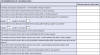
Determination of housing need (Click to see table)Thus from this you will have an idea of the number of lone teenage parents in your area, under the age of 18, who appear to be in need of a change of housing situation or additional support.
4.4 Toolkit: Part 3Information should be obtained on the provision of supported housing for teenage parents in your area from the Local Authority Housing Department. Supporting People teams may also be a useful contact here. You may want to find out about:
n The total number of units of supported housing available to teenage parents.
n The number of units of supported housing currently let to teenage parents.
n Plans to increase provision in the future.
4.5 Toolkit: Part 4Collation, collaboration and communication
Finally, the information collected through stages 1, 2 and 3 should be collated. Thus you will need to compare:
1. The total number of teenage mothers (15–17) in your area
2. How many teenage parents (15–17) have unmet housing need and would benefit from supported housing
3. The availability of supported housing in the area.
This can then be used to make an assessment of current unmet need.
This information should then be communicated to relevant colleagues dealing with improving the situation of teenage parents, and young people generally, including:
¡ Public health
¡ Housing research and development
¡ Housing allocation
¡ Sure Start
¡ Health visitors and midwives
In particular, the information gathered through the toolkit should be reported in the LTPCs’ annual report, which will be distributed to the regional teenage pregnancy co-ordinator, the teenage pregnancy strategy boards and the Supporting People teams.
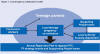
Figure 1: A multi-agency collaborative modelA model for the processes involved in the application of the toolkit is presented in Figure 1. Multi-agency collaboration is vital both for the communication of results and the implementation of improvements, to achieve the policy goal of enhancing the living conditions and levels of support for teenage parents. To achieve this, awareness about the complexity of teenage parents' housing needs must be raised amongst policy makers and practitioners. In turn teenage parents need to be informed about the diversity of housing and support models that can be made available to them and who they can approach to express their housing need and to seek advice.
5 Conclusion
Teenage pregnancy is higher in England in comparison to other Western European countries, and remains associated with poverty and social exclusion. The Social Exclusion Unit report of 1999, a key policy document in this area, identified two main action goals: to halve teenage pregnancy rates for under 18s by 2010 and to reduce teenage parents' risk of social exclusion by supporting their participation into education, training and employment. Supporting teenage parents in a social and material sense is thus a clear and urgent policy imperative. Most importantly for the purposes of this report, tackling the issue of housing need is one of the ways in which this can be achieved.
The housing need of teenage parents is identified in the SEU and consequently in the TPU policy as a key action area. SEU action point 29 states that by 2003 all lone teenage parents under 18, who cannot live with either family or a partner, should be accommodated in supervised semi-independent housing. As this report has shown the issue of where teenage parents live and with whom (either as lone parents or with a partner) and the amount of formal and informal support they receive is a complex and dynamic issue. Some may be living with their parents, but would prefer more independent housing while continuing to access parental support; whilst others may prefer to live independently while receiving formal support. Some may wish to live with their partner, but benefit rules and housing costs may prevent that choice. Others may not have family or partners willing or able to provide support, or they may be seeking refuge from violent relationships. This complexity aside, estimations of the number of teenage mothers in the South West region at approximately 2,700 and the number of currently available supported housing units at 240 suggest that there is a substantial shortfall in provision.
This research has aimed to address the issue of how to reach those teenage parents whose housing need, including need for supported and unsupported housing, remains at present hidden to those working on teenage pregnancy strategies. Along with a review of the relevant research literature and policy documents, combined with secondary analysis of relevant statistical sources, focus groups with key informants were conducted to elucidate the factors that cause teenage parents' housing need to remain hidden and how best this need can be made apparent. The key objective has been the development of a toolkit that could enable a routine assessment of teenage parents housing need. It is hoped that this could be applied and developed to produce a better understanding of the situation of individuals – leading to better housing situations for young mothers – as well as at the aggregate level, so that the levels of need and provision in the region are known. These dual aims are both in line with current policies.
The research findings and recommendations are as follows.
1. Teenage pregnancy alters teenage parents' housing need, for all teenage parents, whether they are in care, living with families or partners, living on their own or street homeless.
Housing need for teenage parents is a dynamic phenomenon. Although living with family can be very satisfactory, providing financial or childcare support, by the time the child reaches one year of age, many leave the parental home or would like the option to leave, as overcrowding and lack of independence can cause conflict. Living with family also means receiving less support with housing costs.
2. Teenage pregnancy is not a fast-track to social housing, contrary to the commonly held assumption. Instead the route to social housing can be a long and complicated journey.
Access to social housing is problematic for all teenage parents, but particularly so for those living with family. A limited supply of the amount and types of social housing results into two access paths: the homeless route and/or a long waiting period on the list for social housing. Those who choose to rent from a private landlord whilst waiting on the housing register tend to move frequently because of high costs and poor conditions. Those who choose to live with family can face even longer waits on the housing register, or have to face the 'eviction letter' scenario – where teenage parents have to prove that their family cannot provide accommodation for them anymore. This clause of proving 'genuine homeless' can be particularly unsuitable for this group, especially as it is often the teenage parent who wants to move out, not their parents who want them to leave. Like all those waiting for social housing, they may have to endure living in temporary accommodation, bed and breakfast hotels, and hostels, which are often unsuitable for children and of low standard. Finally, once a tenancy is obtained many live in deprived and unsafe areas, far away from family or other support networks. Lack of support and services, isolation, boredom and debt are for many the cost attached to independent living. In targeting only those lone teenage parents who cannot live with their family or partner, supported housing policy excludes those that can live with family but would prefer not to. Although some local authorities adopt a 'homeless at home' definition and others are developing 'floating support at home', it is in practice unlikely that a teenage parent living with family will be prioritised.
RECOMMENDATION:
Inclusive policies and practices for all teenage parents.Rather than solely focusing on the provision of supported housing for those young lone teenage parents that cannot live with family, policy should tackle teenage parents' housing need in its multidimensionality.
3. The housing need of teenage parents often remains hidden and therefore unmet.
Selective procedures for accessing social housing, which is in limited supply, may be in poor condition and located in unsafe areas, results in a stigma being attached to social housing. This interacts, and compounds, the stigma of teenage pregnancy. In turn this can result in bad practices, whereby housing application procedures are not followed, which further discourages teenage parents from applying for social housing. Their housing need can thus remain hidden and unmet. A practical recommendation would be to raise awareness amongst practitioners that all teenage parents, despite their current living arrangements, can experience housing need. Rather than ascribing to a culture of dependency, for many teenage parents social housing is a route into independence, which in addition can represent an exit path from conflictual, unstable and violent relationships with partners and/or family members. Likewise, awareness of the diversity of housing options available, in particular concerning the planned expansion of supported housing, should be raised amongst teenage parents themselves. One key suggestion in this respect is to introduce a leaflet on the diversity of housing models for teenage parents in the bounty pack.
RECOMMENDATION:
Promote understanding and awareness amongst teenagers and practitioners.All practitioners working with teenage parents should be made aware of the issue relating to teenage parents' housing need; teenage parents themselves need to be made aware of the housing options available to them.
4. A diversity of supported housing provision can be a solution to the complex housing and support needs of teenage parents.
The advantages of the various models of supported housing are that they can enable a fine balance to be achieved between teenage parents' need for autonomy and their need for support, as well as balancing their need for privacy with the risk of social isolation. On-site support is also often characterised by very good housing conditions in housing projects located in desirable and safe neighbourhoods. Thus on the one hand the current development of supported housing has the potential to improve some of the disadvantages attached to independent social housing. However, there are a number of potential disadvantages which may further accentuate the problems of teenage parents – for instance if they are placed in housing too far away from family to be able to access informal support. Issues such as this need to be tackled, especially in rural areas, otherwise they are likely to deter teenage parents from applying for supported housing. In order to make sure that the housing needs of lone teenage parents, teenage couples, those who wish to engage in co-parenting and those that wish to continue living with their families are met a diversity of housing models is essential. Diversity of provision would thus address individual rather than categorical need and provide teenage parents with some choice in the housing model that provides them with the right balance between autonomy and support best suited to their situation.
RECOMMENDATION: Local authorities should strive to increase the amount and range of housing and support provision for teenage parents.
5. Develop more inclusive policies for teenage fathers.
Teenage fathers are also excluded by the practice of restricting visits and overnight stays in supported housing projects. For those escaping domestic violence these restrictions can be of benefit. But they are also in part a result of the ambiguity of CSA and Benefit Agency regulations which mean that there is a reduction in benefits for the teenage mother if the father stays more than two nights per week. Furthermore, whilst on the one hand the CSA intends to enforce young fathers' financial responsibility, on the other current policy renders joint custody particularly difficult.
RECOMMENDATION: Develop policies and practice which allow teenage fathers to be included in parenting without loss of financial autonomy (or risk of danger) to teenage mothers.
6. Reduce the stigma attached to teenage parenthood.
This research has revealed a concern that if the parenting role is not prioritised and valued then teenage parents are likely to fail both as parents and also in terms of education, work and training, thus affecting future chances of social inclusion. Valuing teenage parents' autonomy and their role as parents would help to reveal unmet need, reduce the stigma attached to supported housing, and in the long term, reduce their own and their child's social exclusion.
RECOMMENDATION: Reduce the stigma attached to teenage parenthood and value the parenting role; other benefits will follow.
Parenting should be valued as a key contribution to society regardless of the age of the mother.
7. Develop protocols of multi-agency collaboration and responsibility.
This research further substantiates the need to find out about teenage parents' housing need in its complexity in order to spur local and national teenage pregnancy and supported housing strategies and hence to meet that need with flexible and diverse housing provision. This requires a protocol for multi-agency collaboration and clear lines of responsibility as to who should act on the information collected. Because of their public health role and expertise and their statutory responsibility to offer a universal service, Health Visitors are key players in this process as they are well placed to find out about teenage parents' housing need.
RECOMMENDATION: Develop protocols for multi-agency collaboration and clear guidelines for responsibility
8. Address training issues for practitioners.
A key practice recommendation is that HVs be given the opportunity to engage in training for public health data collection (including issues of ethics and data protection) and for the development of communication skills, particularly with respect to vulnerable young people. In addition, a training event could be organised to initiate multi-agency collaboration. A one-day event organised by the regional TPC could provide the ideal spur for the development of the multi-agency partnerships needed.
RECOMMENDATION: Training events will need to be organised to support all those involved in identifying teenage parents' housing need, particularly health visitors.
9. Arrange ongoing consultation with teenage parents.
Last but not least, although this research is also drawn on other findings derived from research undertaken with teenage parents, in this research we have investigated teenage parents' housing need without their direct participation. It is recommended that the questionnaire provided in this work to collect data on teenage parents’ housing need is further piloted with teenage parents, as well as Connexions advisers and local teenage pregnancy co-ordinators, and that as policies are put into place their opinions are sought. Reports and policy documents should be made available to teenage pregnancy groups, and teenage parents should be represented on teenage pregnancy strategies boards (currently this is rarely the case). Our understanding of the multi-dimensionality and complexity of teenage parents’ housing need will considerably benefit from direct input from teenage parents.
RECOMMENDATION: Teenage parents should be given a voice in the research and policy process, and their opinions respected.
References
- Allen I, Bourke S and Dowling B. (1998) Teenage Mothers. London: Policy Studies Institute.
- Avon Health Authority. (2001) Health Visitor Public Health Data Collection. Avon Health Authority.
- Biehal N, Clayden, J, Stein, M. and Wade, J. (1995) Moving On: Young People and Leaving Care Schemes. London: HMSO.
- Botting B, Rosato M and Wood R. (1998) Teenage mothers and the health of their children. Population Trends, 93:19–28.
- Burghes L and Brown M. (1995) Single Lone Mothers: Problems, Prospects and Policies. London: Family Policy Studies Centre.
- Connexions, TPU, Sure Start. (2001) Working Together: Connexions and Teenage Pregnancy. Nottingham: DfES.
- www.dfee.gov.uk/careerpubs/connexpubs/index.cfm?Fuseaction=DocumentDetails&DocumentID=58
- Corlyon J and McGuire C. (1999) Pregnancy and Parenthood: the Views and Experiences of Young People in Public Care. London: National Children's Bureau.
- Dawson N, Meadows S. (2001) Education and Occupational Training for Teenage Mothers in Europe: UK Report, University of Sheffield and Bristol.
- Department of the Environment, Transport and the Regions. (2001) Supporting People: Policy into Practice. London: The Stationery Office.
- Department of Health. (1992) Health of the Nation: a Strategy for Health in England. London: The Stationery Office.
- Department of Health. (2001) Making a Difference in Primary Care: the Challenge for Nurses, Midwives and Health Visitors. www.doh.gov.uk
- Department of Health. (2002) Government Response to the First Annual Report of the Independent Advisory Group on Teenage Pregnancy. www.doh.gov.uk
- Department of Transport Local Government and the Regions. (2002) More Than a Roof: a Report into Tackling Homelessness. www.housing.odpm.gov.uk/information/homelessness/morethanaroof
- Department of Transport Local Government and the Regions Teenage Pregnancy Unit. (2001) Guidelines for Good Practice in Supported Accommodation for Young Parents. www.teenagepregnancyunit.gov.uk
- Fraser AM, Brockert JE, Ward RH. (1995) Association of young maternal age with adverse reproductive outcomes. New England Journal of Medicine, 332:1113–17.
- Geronimus AT. (1996) What teen mothers know. Human Nature, 7:323–52.
- Giullari S. (2002) Comparing kin support for lone mothers in Italy and England: moral autonomies, kin relations and social rights. Unpublished PhD thesis, University of Bristol.
- Hinton T and Gorton S. (2001) Good Practice in Supported Housing for Young Mothers. Report for the Teenage Pregnancy Unit, Department of Health and DTLR.
- Hobcraft J, Kiernan K. (2001) Childhood poverty, early motherhood and adult social exclusion. Journal of Sociology, 52:3;495–517.
- Home Office. (1998) Supporting Families. The Stationery Office, London.
- Institute of Housing. (1993) One Parent Families – Are They Jumping the Housing Queue? Briefing Paper
- Kiernan KE. (1995) Transition to Parenthood: Young Mothers, Young Fathers – Associated Factors and Life Experiences. Welfare State Programme Discussion Paper 113 LSE.
- Kinra S, Stedmon-Taylor J and O'Brien J. (2000) Social determinants of children with behavioural problems (abstract). Journal of Epidemiology and Community Health, 54:797.
- Lawlor A and Shaw M. (2002a) Too much too young? Teenage pregnancy is not a public health problem. International Journal of Epidemiology, 31:552–554.
- Lawlor A and Shaw M. (2002b) What a difference a year makes? Too little too late. International Journal of Epidemiology, 31:558–559.
- Luker K. (1996) Dubious conceptions: the politics of teenage pregnancy. Harvard University Press: London.
- ONS. (2000) FM1 Birth Statistics. London: The Stationery Office.
- National Housing Federation. (2002) Briefing on recent changes in legislation governing homelessness and allocations. Available from the NHF website.
- National Statistics. (2003) Report: Conceptions in England andWales, 2001. Health Statistics Quarterly, 17:73–74.
- Phoenix A. (1991) Young Mothers? Cambridge: Polity Press.
- Shepherd, M. (1992) Comparing need with resource allocation. Health Visitor, 65:303–6.
- Simms M and Smith C. (1986) Teenage Mothers and Their Partners: a Survey in England and Wales. London: HMSO.
- Smith-Bowers W. (2002) First Steps: Teenage Pregnancy and Supported Housing in Buckinghamshire. London: Research Focus Group Report N. 0012.
- Social Exclusion Unit (1999) Teenage Pregnancy. London: HMSO.
- South West Public Health Observatory. (2001a) Teenage Pregnancy in the South West of England (1992–1998). Available at www.swpho.org.uk.
- South West Public Health Observatory Bulletin. (2001b) Teenage Pregnancy in the South West of England. Available at www.swpho.org.uk.
- Speak S, Cameron S, Woods R and Gilroy R. (1995) Young Single Mothers: Barriers to Independent Living. London: Family Policy Studies Centre.
- TPU and DTLR. (2001) Guidelines for good practice in supported accommodation for young parents.
- Volger C and Pahl J. (1999) Money, Power and Inequality in Marriage. In: G Allan (ed) The Sociology of the Family. Oxford: Blackwell.
APPENDIX 1
A. How many female teenagers there are in your area?
Worked example – estimating the prevalence of 'teenage mothers' in Bristol
Using data from the 2001 census (see table A1 below) boxes A1 to A6 are completed. As population estimates are currently being revised, we use 2001 data for 2000 and 1999 as well.

You may need to take into account revisions of population estimates due to the 2001 census.
B. The teenage pregnancy conception rate.
Fill in cells B1 to B6 in the following table with the teenage pregnancy rate per 1,000. If you have this for individual years of age use that, if not use the rate for ages 15–17. Use the rates from previous years for cells B4 to B6.
C. For each cell C1 to C6, multiply the population (A) by the rate (B) and divide by 1,000. E.g. Cell C1 = (A1*B1)/1000, C2 = (A2*B2)/1000 etc.

D. Finally sum the cells C1 + C2 + C3 + C4 + C5 + C6 to get the total number of teenage mothers in your area.


Table A1: Teenage pregnancy rates (per 1,000) for 1999, 2000 and 2001 for the South West, and female population aged 15-19 (1999, 2000, 2001) and number of "teenage mothers"
APPENDIX 2 (pdf file)