Waste management and public health: the state of the evidence
Impact on human health
How might waste management practices impact on human health?
3.1 Definition of health
An often-quoted definition of health is one provided by the World Health Organisation – health is a 'state of complete physical, mental and social well-being and not merely the absence of disease and infirmity'. Better Health, Better Wales (Welsh Office 1998) added to this by saying that sustainable health is achieved 'when people and communities can take control of their lives and are able to live their lives to the full.'
3.2 Case studies
Two case studies illustrate the issues involved in finding evidence of the effects of waste management operations on health. The background to each case is presented in this section and the relevant findings in the sections which follow.
3.2.1 Nant-y-Gwyddon, Wales
In 1988, the Nant-y-Gwyddon landfill site was opened to dispose of household, commercial and industrial waste. In the same area, there were up to seven other operating and closed landfill sites (Roberts et al 2000). There had also been a municipal waste incinerator located in a steep north westerly valley running through the area. The incinerator operated between 1974 and 1987 and had been closed because of local complaints, poor performance and air pollution (Roberts et al 2000). In 1996, residents complained about the odours emanating from the Nant-y-Gwyddon landfill site. They formed an action group called RANT – Residents Against Nant-y-Gwyddon tip and asked the health authority to investigate the effects on their health. The health authority met with the residents and identified a list of health concerns (Fielder et al 2000). These were mortality, hospital admissions, and various reproductive health outcomes. No exposure data were available and there was no community monitoring during the peak of the problem. The exposed population was defined as residents living in the five electoral wards within 3 km of the site, a population of 20,000 people. The comparison group was the population living in 22 other electoral wards in the same local authority, matched for deprivation by the Townsend score.
The odour was identified as hydrogen sulfide but monitoring of the site in 1997 revealed higher than normal levels of potentially toxic chemicals such as styrene, dimethyl styrene, ethyl benzene and C4 alkyl benzenes. Hydrogen sulfide is not known to cause congenital abnormalities but is likely to cause headaches, eye irritation and sore throats.
3.2.2 Love Canal, United States
A canal in Niagara Falls, New York state, was used as a landfill site by the Hooker Chemical Company. Between 1942 and 1953, the company disposed of 19,000 tonnes of organic chemical wastes which were produced during the manufacture of pesticides. In 1953 when the canal was full, it was covered with a clay cap and sold to the Niagara Board of Education for $1.00. A school and playground were built on the canal and housing built adjacent to it. The integrity of the clay cap was breached in the process with the result that rain seeped in and eventually caused the chemicals to overflow the canal. The residents and city officials were aware of "black sludges bleeding through basement walls, smells like a chemical factory, rancid liquids of yellow and orchid and blue" oozing out of yards, etc (Brown 1980). However, there was no concern about the health effects of such exposure until the late 1970s. In 1978, the New York State Department of Health evacuated the 235 families in the ring of homes closest to the canal. Two years later, the federal government evacuated 800 more families in the next ring of homes. The public alarm over the incident was instrumental in bringing about Superfund legislation.
At Love Canal, records from Hooker Chemical Company revealed that the waste consisted of lindane and other chlorinated hydrocarbon by-products. Investigations of the canal led to the identification of 248 chemicals by 1980. These included lindane, benzene, toluene, chloroform, trichloroethylene, tetrachlorethylene, hexane, xylenes, trichlorophenol, hexachlorcyclopentadiene and dioxin isomers (Paigen et al 1987). Toxicology data were available on fewer than half of these chemicals and much of the available data were incomplete. For those contaminants where toxicological data were available, the implications for human health were not reassuring. Benzene was one of the volatile organic chemicals identified in the canal. From toxicological and occupational studies, benzene is known to cause leukaemia, aplastic anaemia, bone marrow depression, central nervous system depression and skin irritation. It is suspected of embryotoxicity, teratogenesis and of leading to female infertility and lymphoma (Buffler et al 1985).
3.3 Quantifying factors which may affect health
The definitions of health in 3.1 provide a foundation for identifying factors associated with waste management which might have an impact on health. These may be beneficial, damaging or neutral. They may be present in waste or formed during the waste management process. Table 5 illustrates the factors which may impact on health and have been studied in relation to methods of waste management.
The references listed in Table 5 are examples of studies found in the literature which have investigated an association between the factor mentioned and the waste management method. This table is
not
a comprehensive listing of all the studies found in the literature nor is it evidence of a causal association.

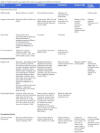
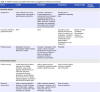
Tables 5a, 5b, 5c: Health hazards associated with waste management methods
3.3.1 Quantifying factors which may impact on health
Health hazards can be measured or estimated with varying degrees of accuracy. The number of jobs lost or created by a waste management policy can be counted. Community involvement can be measured by assessing the extent of activity in community recycling schemes. Physical hazards can be identified by measuring concentrations in:
• Waste – i.e. in emissions, incinerator ash, sewage sludge, etc.
• The environment around the waste management site – i.e. in the soil, air, plants, animals, water, groundwater.
• People – i.e. the body burden.
With improvements in analytical methods, contaminants can be identified at very low concentrations, so small that their implications for human health is a matter for conjecture.
Identifying and measuring hazards gives an impression of accuracy and can lead to the assumption that the measurable risks from physical hazards are more substantial and important than those from psychosocial hazards. In fact, data about physical hazards are also incomplete. Information is lacking about the toxicity, persistence and ability to bioaccumulate of many of the hundreds of thousands of chemicals that end up in waste. Out of some 100,000 chemicals notified before 1981, the so-called Existing Chemicals, most have not been assessed. Of some 2,000 chemicals notified since 1981, the so-called New Chemicals, many assessments are not complete (Santillo, 1999).
3.3.2 Measuring toxicity
Most information on toxicity is derived from animal experiments. Toxicity is usually defined in terms of LD50, the dose in mg/kg body weight required to kill half of the animals tested. This value is specific to the species tested as well as to the conditions under which it was tested. It is hard to know what order of magnitude to use to extrapolate from animals to humans as there are vast differences between species. Extrapolation to humans is usually based on the most sensitive animals species tested.
Chronic toxicity is more relevant than acute toxicity to the type of exposure from hazardous waste sites but is even harder to determine for humans. Some knowledge is derived from occupational exposure but most is extrapolations from short term high doses in animals to long term low doses in humans. This can lead to under or over estimations of toxicity. Some chemicals such as cyanide may be hazardous at high doses but harmless at low doses while others, such as PCBs, do not cause acute toxicity at high doses but are carcinogenic or teratogenic at chronic low doses.
The toxicity of heavy metals is well known from clinical and epidemiological studies and is not dependent on extrapolations from animal studies (Denison and Silbergeld 1988). Heavy metals, i.e. lead, mercury, cadmium, accumulate both in the environment and within the human body. Long term low level releases from waste management operations have the potential to lead to substantial levels in the environment and the body. Given that there are other environmental sources of metals and that every person carries measurable levels in their bodies, a small increase in exposure from incineration could theoretically raise levels in people enough to cause overt toxicity. In some populations, existing levels of exposure and body burdens are already in a range associated with detectable adverse impacts. Exposure to persistent chemicals cannot be considered in isolation from other sources.
3.3.3 Combination of chemicals
In most waste, a mixture of different contaminants will be present. Little is known about the toxicity of combinations of contaminants, or whether their interaction is to increase toxicity or to modify it. Assessment of the potential health hazard of mixtures is a challenging task for toxicology. The risks may be additive or there may be interaction effects that make the risks higher or lower than that predicted by analysing individual contaminants separately. There may be no interaction at all, with each compound acting independently. Nor is there an adequate understanding of the effects on toxicity of the changes which occur when chemicals migrate through soil or water. Unlike laboratory conditions where animals are exposed to one chemical at known doses, people's exposure to waste sites is typically complex with many agents and multiple pathways (Hansen et al 1998, Carpenter et al 1998).
3.3.4 Comparing hazards from different waste management options
Both incinerators and landfill sites result in the emission of toxic pollutants, including dioxins. While most people assume that the greatest risk to health from airborne pollutants arises from incinerators, a generic comparison using modelling techniques came to the opposite conclusion (Bridges et al 2000). The comparison was based on worst case off-site exposures and concluded that landfills without gas collection pose a potentially higher risk than municipal solid waste incinerators performing to UK standards. It must also be understood that incineration and landfill disposal are inextricably linked. Improvements in air quality controls reduce the toxicity of emissions from incinerators but increase the toxicity of fly ash and bottom ash disposed of in landfill. This practice of risk transfer must be considered when evaluating the health risks from waste management methods.
3.4 Exposure routes
For physical hazards, the crucial link between a health hazard and a health outcome is exposure. The risk to health depends not only on how much is present but also on whether there is a route by which people may be exposed. "Indeed, in the absence of exposure, even the most toxic compound carries less risk than an innocuous one." (Kipen 1996 p221.) A complete exposure pathway is a pathway which starts at the source of contamination and travels through environmental media to the point of exposure and by some route of exposure to an exposed population (WHO European Centre for Environment and Health 2000). An exposure pathway has three elements:
• release from the site
• transport through environmental media
• uptake by people.
If any of these elements are missing, there is no threat to health.
3.4.1 Release
Pollutants are released from waste operations as gases, liquids and solids:
Gases
• Gases exit from incinerator stacks and migrate off landfill sites.
• Organic chemicals volatilise into the atmosphere. This is a problem where the soils are very heavily contaminated or where there are open pools of pure chemicals in a concentrated aqueous solution (Eduljee 1992).
Liquids
• Leachate is carried out of the contaminated area by percolating water into groundwater. Leachate is a combination of liquid waste arriving in the site and water added due to rainwater ingress or groundwater infiltration. Leachate is formed by:
• dissolution of soluble matter
• bacterial degradation of organic matter – oxidative decomposition by acetogenesis and anaerobic decomposition by methanogenesis.
• solubilisation – chemical degradation where insoluble inorganics become soluble.
• Leachate is carried off-site by surface runoff.
• Wastewater from incinerator cleaning equipment.
• Treated sewage effluent.
Solids
• Dust emissions resulting from unloading solid waste, loading temporary landfill cover material, lift construction, vehicle traffic to the site, wind erosion from site if large areas are left exposed.
• Incinerator ash includes bottom ash (i.e. the solid residue at the bottom on the grates, the ash remaining after combustible material has been burnt) and fly ash (i.e the solids collected by particle trapping devices beyond the combustion chamber). Ash contains highly concentrated and bioavailable toxic heavy metals and dioxins.
Amounts released
The quantities released are crucial to an assessment of exposure. In landfill operations, levels of pollutants vary greatly according to the nature of the wastes deposited and the time period since they were dumped. The types of chemicals found in landfill gas change during the chemical and microbial decomposition of the waste. Even after the landfill site is closed, there will be emissions for many years, perhaps up to 50 years. (For discussion of the different chemicals produced during the stages of landfill degradation, see Bridges et al 2000.) Some pollutants, such as metals, are present in incinerator emissions because the combustion process does not destroy them while others are formed during the cooling of the gas stream (Bridges et al 2000).
3.4.2 Transport of pollutants
Pollutants are transferred into and out of various environmental media. Rates of transfer are affected by biodegradation, partitioning, bio-concentration, dilution, and other physical, chemical and biological processes (National Research Council 2000).
The ground level concentrations of pollutants from an incinerator are affected by the height of the stack, the gas cleaning technology in operation, prevailing wind and other weather conditions and the local topography. Metals are neither created nor destroyed by incineration but are transported from their embedded, inert phase in the waste to a highly mobile particle. Some particles condense on the surface of the fly ash and are eventually sent to landfill where certain conditions enhance their leachability in water. Many of these particles are of respirable size, less than 10 micrometers, and can travel long distances through the air. Metals are also released from incinerators as fumes.
3.4.3 Uptake
Pollutants may be released from the waste site and may remain toxic after passing through various environmental media but will only pose a risk to health if they are taken up by people in sufficient quantities and over a sufficient length of time. Potentially exposed populations are waste site workers, construction workers involved in development of operational or closed site, on-site trespassers, neighbouring residents and those using the site and surrounding area for recreation. The main routes by which people may become exposed to pollutants from waste sites are shown below.
Inhalation
Pollutants released into the air from incinerators, composting facilities, and landfill sites may be inhaled by people living in the vicinity or working at the sites. Many particles from incinerator fumes and fly ash are of respirable size and can be directly inhaled. Volatile organic chemicals may evaporate into the atmosphere from landfill sites and be inhaled. Measurements made below ground level using fixed-point samples in a landfill site do not indicate a health risk since there is no chance of a person inhaling the pollutants there. There may be a health risk from the inhalation of the combustion products of landfill gas from flaring and use of the gas in gas turbines and internal combustion engines (Bridges et al 2000).
Love Canal – inhalation was an important exposure route for some of the residents. Because of the way the groundwater moved, volatile chemicals escaping from the canal seeped into the basements of houses that were built near former stream beds and ponds. Chemicals either migrated through the porous walls or sump pumps allowed evaporation into the homes. High concentrations of benzene, toluene and other Love Canal chemicals were measured in indoor air.
Nant-y-Gwyddon – inhalation was the only exposure route considered, as the investigation arose out of complaints about odour.

Figure 5: Exposure pathways from a landfill site
Ingestion
Particulates with adsorbed chemicals or heavy metals can be carried by the wind and deposited on soil, surface water, food and dust. This is particularly a risk with toxic metals such as lead and cadmium and persistent organic chemicals which contaminate soil either by direct deposition or when contaminated sewage sludge or incinerator ash is applied to agricultural land.
Toxins may be taken up by crops or eaten by livestock, both of which may be consumed by people. An example of how this may happen was described in a report to the Society for Clean Air and Environmental Protection (Farmer & Hjerp 2001, section 5.8). The incident concerned the use of fly ash and bottom ash from the Byker incinerator to construct footpaths in allotments in Newcastle over a six year period. The allotment soil became heavily contaminated with heavy metals and dioxin. Eggs from the allotments were found to have higher than background levels of dioxins.
Small children tend to put things in their mouths that have been in contact with the soil.
Love Canal – ingestion was considered to be one pathway by which children were exposed. "Children picked up raw chunks of lindane and phosphorous and threw them around and sloshed through liquid organic wastes." (Albert 1987)
Nant-y-Gwyddon – not relevant.
Ingestion – drinking water
Both groundwater and surface water may be contaminated by pollutants from all types of waste disposal systems. Leachate that percolates downward from a landfill site ends up in the water table from where it may be extracted for domestic water supply. Since ash residues from incinerators are dumped in landfill sites, this must be considered an important exposure route from incineration as well as from landfill. Surface waters may be contaminated by discharges from sewage treatment works. Alkylphenols, known for their endocrine disrupting effects, have been detected in UK rivers with concentrations of 180 µg/l in the River Aire downstream from a sewage works (Dixon et al 1996). Abstraction of drinking water from rivers contaminated with sewage effluent or landfill leachate could potentially lead to exposure to chemicals in the water if they are not removed by the water treatment procedures. A Friends of the Earth report (Dixon et al 1996) found that not all water authorities carry out analyses for alkylphenol ethoxylates nor for all the alkylphenol ethoxylate-type compounds of concern in the drinking water.
Love Canal – drinking water was supplied by the city and was not contaminated but chemicals from the canal were found in sewers and neighbourhood creeks where children played. While the canal was being filled, children swam in the canal and they could have swallowed the water.
Nant-y-Gwyddon – this form of uptake was not considered by the investigators.
Skin contact
Direct contact with the waste or with contaminated soils is particularly a threat to landfill workers, construction workers and workers carrying out remedial measures on waste sites. Tars, oils and corrosive substances can cause irritation. Children are more likely than adults to come in contact with soil.
Love Canal – there were incidents where children were burned by exposed residues on the playground.
Nant-y-Gwyddon – not relevant
Fire and explosion
Combustible materials such as coal, coke particles, oil, tar, pitch, rubber, plastic and household waste may ignite in landfill. These may release toxic gases and cause a risk of explosion. Methane from landfill sites is an explosion risk.
Love Canal – there were reports of exploding rocks (Edelstein 1988, p47).
Nant-y-Gwyddon – not relevant
3.5 Assessing exposure
The WHO European Centre for Environment and Health convened an expert working group in Lodz, Poland in April 2000 to recommend methods of assessing exposure to health hazards released from landfills and to produce practical guidelines for future exposure assessment in local situations (WHO European Centre for Environment and Health 2000). The aim was to encourage the use of standardised exposure assessment methods so that it would be possible to make comparisons between sites and to combine the results from a range of epidemiological studies. The report provides guidelines for assessing exposure to hazards released from waste sites. A summary of the five essential steps follows:
Box 1: Guidelines on assessing exposure to hazards released from waste sites: five essential steps
(Source: WHO European Centre for Environmental Research 2000)
1) Site characterisation
What is the current use of the site?
Is there any information on the nature of the waste in the landfill?
Is the site engineered or not?
Is the site accessible or not to the general public?
Are there any contaminants of concern and are they emanating from the site?
No – no further action
Yes/don't know – go to step 2
2) Characterisation of receptors
What is the size and composition of the population at risk?
What are the characteristics of the most highly exposed population?
Are there direct or indirect pathways leading to human exposure?
No – no further action
Yes/don't know – go to step 3
3) Characterisation of exposure pathways
Are there water resources such as surface water or groundwater used in the vicinity of the landfill?
Are the hazards dispersed through the air?
No – no further action
Yes/don't know – go to step 4
4) Determination of concentrations of contaminants
Measure or estimate the concentration of the contaminants of concern in the environmental media with which humans might be in contact.
What are the maximum concentrations?
Do the levels exceed the applicable limit or standard?
No – no further action
Yes/don't know – go to step 5
5) Exposure estimation
Carry out exposure assessment by calculating the intake of contaminants using data on concentration intakes and the population at risk.
Is there potential for population exposure which might result in a health concern?
No – no further action
Yes/don't know – decide whether epidemiological studies or health surveillance should be carried out, additional data for exposure assessment should be collected or risk management measures should be installed or improved.
3.5.1 Hierarchy of exposure data
A hierarchy of exposure data has been proposed which ranks the exposure assessment from best (i.e. yields the most convincing evidence) to worst in terms of its relation to actual exposure – Figure 6 (National Research Council 1991).

Figure 6: Hierarchy of exposure data
The majority of the epidemiological studies investigating links between waste management and health outcomes rely on the worst type of evidence – that of residence or employment near the site. A tiny minority of studies are based on quantified ambient or personal measurements of pollutants taken at the time of potential exposure. In most studies, the waste management facility is like a black box, assumed to be emitting toxic compounds but with no actual measurements to use in the exposure assessment.
3.5.2 Risk assessment
A risk assessment methodology to characterise and evaluate the health effects arising from exposure to landfill sites is described by Eduljee who tested it out on three landfill sites in England (Eduljee 1992, Department of the Environment 1994). The risk assessment involves simplifications of the exposure scenarios, of off-site transport of pollutants and of uptake at the point of exposure. He claims that it is still possible to develop a credible estimate of the health risks to exposed populations even with these simplifications. However, in the UK, the data needed even for simplified risk assessments are not routinely collected. In particular, there is rarely an adequate characterisation of the waste within the landfill nor are there data about flow characteristics. Risk assessments cannot be carried out for the majority of landfills in the UK.
Love Canal – in the health impact studies carried out on Love Canal residents, no exposure measurements were possible as many of the chemicals were not persistent. Tests were done by the Environmental Protection Agency for chemicals in the blood of 36 Love Canal residents but these did not show higher than expected levels (Heath 1987). Exposure in other Love Canal studies was estimated on the basis of distance of residence from the canal (Vianna and Polan 1984). Paigen and Goldman (1987) explained how their study proving an effect on birthweight, children's growth and indigenous wildlife was limited by the lack of "certainty whether those classified as exposed really had exposure, or whether those classified as unexposed really were unexposed."
Nant-y-Gwyddon – No exposure data were available and there was no community monitoring during the peak of the problem.
The procedures for assessing the health risks and calculating a lifetime excess risk are not discussed in this report. (For a detailed analysis of the risk to health posed by contaminated soil, see Hawley 1985). Hawley describes the assumptions and calculations used to derive annual average intake values, absorption rates, toxicity and excess lifetime cancer risk for young children, older children and adults exposed to contaminants in soil from indoor and outdoor activities.
In general, high-dose exposure and long-term, low-dose exposure are more likely to result in health impacts than short-term, low-dose exposures (Buffler et al 1985). Since it is extremely difficult to define exposure and thus observe a dose-response relationship in people exposed to contaminants from waste management sites, it is very difficult to prove that the health impacts observed are caused by the exposure.
3.6 Potential impacts on health
Health impacts result from an interaction between the factors affecting health and the health status of exposed populations. In any population, there will be unexplained health problems. The types of health impacts experienced by people exposed to contaminants from waste management sites and those experienced by unexposed people are primarily the same. Health effects are non-specific – the human body has only a limited number of responses to a wide range of internal and external assaults. The responses are determined by the contaminant levels and the susceptibility of individuals along the range shown in Figure 7 (Hansen et al 1998).
The types of health impacts that have been investigated is very wide. Ideally, the selection of possible health outcomes for study should arise from the measurements of hazardous compounds at the site and the likely toxic effects of such compounds. However, as described earlier, such exposure data are often missing. In practice, the selection of health outcomes depends on the availability of data, the level of effort planned, the frequency of the outcomes and biological plausibility. The literature includes studies of a wide range of health outcomes but the most promising are believed to be adverse reproductive outcomes, chromosomal damage and neurotoxic effects (Marsh & Caplan 1987).
The following categories represent the main health outcomes found in the literature; other categories have been presented (BMA 1998, Marsh & Caplan 1987 p17). The examples given are from studies on the database.
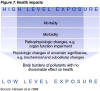
Figure 7: Health impacts
3.6.1 Reproductive outcomes
Reproductive outcomes include early fetal loss, perinatal death, low birth weight, prematurity, congenital abnormalities, chromosome abnormalities detected in fetuses, sperm abnormalities, altered sex ratio, multiple births, decreased fertility, sexual dysfunction, childhood morbidity, and age at menopause (list from Marsh & Caplan 1987 p20). The most commonly studied outcomes in the literature on waste management are congenital abnormalities, low birth weight, sperm abnormalities, miscarriage and infertility. The usefulness of selecting these outcomes to investigate causality is discussed in the review by Marsh and Caplan (1987).
It is reasonable to look for increased rates of adverse reproductive outcomes because in any waste stream, there will be many agents with known or suspected reproductive toxicity (see Kipen 1996 for examples). Although only five non-infectious agents have been shown in epidemiological studies to cause adverse reproductive outcomes through environmental exposure, rather than through occupational or pharmacological exposure, there are hundreds more agents which test positive in animal studies or in mutagenicity assays (Kipen 1996).
Field and laboratory studies on a range of wild animals have demonstrated adverse reproductive outcomes from xeno-oestrogens, natural and synthetic substances with oestrogenic or anti-oestrogenic properties (IEH 1995). These compounds (listed in Table 5) occur in sewage discharges and have been associated with endocrine disruption in wildlife, including "thyroid dysfunction in birds and fish, decreased fertility in birds, fish, shellfish and mammals, gross birth deformities in birds, fish and turtles, metabolic abnormalities in birds, fish and mammals, behavioural abnormalities in birds, demasculinisation and feminisation of female fish and birds, and compromised immune systems in birds and mammals" (Colborn & Clement 1992 quoted in IEH 1995). The relevance of these studies to human health is not clear but there is concern about the fall in quantity and/or quality of sperm in recent decades (IEH 1995, Colborn et al 1997).
Love Canal – Low birth weight, prematurity and birth defects in children living near the hazardous waste site (Goldman et al 1985).
Nant-y-Gwyddon – congenital malformations, spontaneous abortions, stillbirths (Fielder et al 2000).
3.6.2 Non-communicable diseases
According to the chair of the US Committee on Environmental Epidemiology, the main health outcomes from exposure to hazardous waste sites that should be considered are a range of diseases, including asthma, adult-onset respiratory hypersensitivity, disturbance of lung function and growth, degenerative neurologic diseases, immunologic and endocrine diseases such as diabetes and cancer, including leukaemia (Miller 1996).
Love Canal – cancer incidence in the Love Canal area (Janerich et al 1981).
Nant-y-Gwyddon – rates of hospital admissions for general medical and geriatric, all respiratory disease and asthma (Fielder et al 2000).
3.6.3 Symptoms
Symptoms are either self reported or inferred from consumption of over-the-counter drugs or prescribed medications.
Love Canal – complaints by residents of chloracne, skin irritation, eye irritation, ulcers, pains, and wide range of unexplained health problems. Those who believed in the chemical risks suffered from "unpredictably recurring, debilitating and diagnostically elusive illnesses" (Edelstein 1988).
Nant-y-Gwyddon – residents complained of stress, fatigue, headaches, eye infections, coughs, stuffy nose, dry throat, nausea (Fielder et al 2000).
3.6.4 Injuries and poisoning
These are more likely to be associated with occupational health problems than with residence near a site.
Death, disabling and non-disabling injury associated with the removal of contaminated soils (Mar et al 1993).
Heat stress in hazardous waste workers (Favata et al 1990).
3.6.5 Microbial diseases
These include viral, bacterial, fungal and parasitic diseases.
Health risks associated with bathing in sewage-contaminated sea water (Balarajan et al 1991).
Risk of infection associated with a wastewater spray irrigation system used for farming (Linnemann et al 1984).
3.6.6 Mortality
Love Canal – cause specific mortality (Stark 2000).
Nant-y-Gwyddon – assessed whether there was difference in age standardised rates of death, all cause, respiratory and cancers (Fielder et al 2000).
3.6.7 Psychosocial impacts
Love Canal – stress, stigma, lack of support, community spirit, health preoccupation, dread, fear, well-being, depression, dissatisfied with life, loss of personal control, increase in stress related behaviours such as smoking, increased irritability (Edelstein 1988).
Nant-y-Gwyddon – only physical health problems were reported (Fielder et al 2000).
3.6.8 Economic impacts
Love Canal – declaration of a health emergency by state department of health led to evacuation of pregnant women, then relocation of some residents with economic costs.
Nant-y-Gwyddon – not described.
Other example:
Social and economic consequences of health effects to incineration workers – workers' compensation benefits, loss of home, loss of car, loss of employment (Callender et al 1997).
3.6.9 Subclinical abnormalities – biomarkers
Some of the biomarkers studied are:
• Tests for organ function – e.g. liver function tests.
• Immunological abnormalities – e.g. lymphocyte tests.
• Cytogenetic effects – chromosome aberrations, assays of sister chromatid exchanges.
• Neurotoxic effects – nerve conduction abnormalities, evoked-potential studies.
The significance of these, as they have little discernible clinical effect, is difficult to assess. The advantages and limitations of using biomarkers is described by Marsh and Caplan (Marsh & Caplan 1987).
Love Canal – Cytogenetic findings in persons living near the Love Canal (Heath et al 1984).
Nant-y-Gwyddon – no biomarkers investigated.
3.6.10 Broad environmental factors
Global warming can contribute to health indirectly by disturbing crop production, and affecting the spread and transmission of contagious and vector-born diseases such as cholera and malaria.
How strong is the evidence that current waste management practices have had an impact on human health?

