Waste management and public health: the state of the evidence
Waste management
This section is a summary of current waste management practice in England with particular emphasis on the South West and the public health implications.
2.1 Background
2.1.1 Sources of waste
According to the Environment Act 1995, waste is defined as "any substance or object which the holder discards or intends or is required to discard." Waste is a complex mixture of different substances and objects, only some of which are intrinsically hazardous to health. However, any type of waste has the potential to affect health depending on the collection system used, the location where waste is generated, and the waste management strategy employed. For example, a plastic bottle is unlikely to be responsible for any adverse health effects when buried in landfill. However, the same plastic bottle burned in a poorly managed incinerator could generate dioxins which could potentially lead to an increased risk of cancer in people working in or living down wind of the incinerator.
Sewage is any type of waste that passes through the sewage treatment process. As well as pathogenic micro-organisms from human excrement, sewage contains many other hazards to health – heavy metals and toxic compounds from road run-off waters, toxic and endocrine-disrupting compounds from toiletries, cosmetics, and detergents, pesticides from surface water run-off, and natural hormones from human urine.
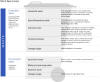
Table 2: Types of waste
2.1.2 Quantity of waste
In the South West, 11 million tonnes of controlled waste were handled, treated or disposed of in the year 1998/99. This included 5.2 million tonnes of commercial and industrial waste and 2.5 million tonnes of municipal waste but does not include sewage sludge. The amount of waste produced in the South West did not exceed 12% of the total for England and Wales, which is proportional to the number of people and industries based in the South West. In addition, approximately 14.5 million tonnes of waste was produced by the agricultural sector, with Cornwall, Devon, and Somerset producing the most. (See Figure 1.)

Figure 1: Waste production in the South West
2.1.3 Information on waste
The data collected are not detailed enough to make meaningful assessments of potential health impacts that might arise from waste management practices and do not include detailed information about the composition of the waste collected nor of off-site emissions from waste management operations. Accurate exposure assessments are not possible without such data. (This paragraph refers to all types of waste above, not just special waste.)
Municipal waste
Municipal wastes are whatever local authorities collect and dispose of. About 90% of municipal waste comes from households (DETR 2000). The rest consists of some commercial waste, road and pavement sweepings. Extensive data are collected about municipal waste (DETR 2000). For the past four years, a questionnaire has been sent annually to all waste collection authorities, waste disposal authorities and unitary authorities asking about the amount of municipal waste collected and disposed of, the levels of recycling and recovery of household and municipal waste, methods of waste containment, levels of service provision and details of waste collection and disposal contracts.
Commercial and industrial waste
In 1989–99, a survey providing baseline information of some 20,000 businesses was carried out (Strategic Waste Management Assessment – South West, Environment Agency 2000). The information collected for each business included the type of waste (i.e. mixed, special or packaging) the quantity of waste, the waste form (i.e. solid, liquid or sludge) and the waste management method.
Agricultural waste
The South West produces nearly a quarter of all the agricultural waste produced in England and Wales (Environment Agency 2001). There is little information available on the management of agricultural waste and by-products although compounds in quantities significant to health are produced of pesticide washings, plastics, tyres, oils and sheep dip (Environment Agency 2000 SWMA).
Special/hazardous waste
The Environment Agency has a Special Waste Tracking database, SwaT, but it is difficult to calculate how much special waste is produced. The factors that make it difficult are discussed in Chapter 2 of the Strategic Waste Management Assessment – South West, 2000 (Environment Agency 2000).
2.2 Managing waste
Waste management is broader than just the disposal of waste. It includes the generation, collection, processing and transport of waste as well as the minimisation of the production of waste and the reconceptualising of waste as a resource. The public health impacts are influenced by the overall waste management strategy adopted locally, regionally and nationally.
2.2.1 National waste strategy
The Waste Strategy 2000 (DETR 2001) sets out the Government's strategy for managing waste. The strategy has been influenced by the idea of sustainable development first described in the 1992 United Nations Earth Summit. The idea is that decision makers must strike a balance between continued economic development and the need to protect and enhance the environment. Sustainable development is "development which meets the needs of the present without compromising the ability of future generations to meet their own needs" (Brundtland Report 1987).
In terms of protecting human health, the Waste Strategy mentions the recently adopted
Landfill Directive with its stringent controls and the high standards expected of new high temperature incinerators.
Although not explicit in the Waste Strategy, the waste management options chosen by decision makers could have an impact on health both directly and indirectly:
1. Directly, by leading to potential adverse and/or beneficial health impacts such as increased risk of cancer or decreased quality of life.
2. Indirectly, by the broader environmental impact on the global ecology, such as the contribution to global warming, loss of bio-diversity and the depletion of non-renewable resources.
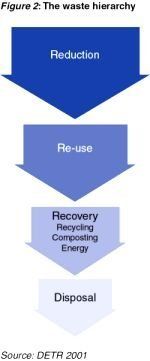
The Strategy explains the concept of the Best Practicable Environmental Option – i.e. "the option that provides the most benefits or the least damage to the environment as a whole, at acceptable cost, in the long term as well as in the short term". The Best Practicable Environmental Option is likely to be a mix of different waste management methods. To guide decision makers, the Strategy proposes a "waste hierarchy". The most effective solution is to reduce the generation of waste, the option at the top of the hierarchy. Only when the options at the top are not appropriate should waste be disposed of (see Figure 2).
This holistic approach, if adopted, would go a long way towards reducing the health risks associated with particular waste management options. Because the waste stream is managed as a monolithic material using a single management technique, spurious comparisons are made between incineration and landfill as if they were alternative methods of disposal. An integrated waste management system requires separation of waste as well as restrictions on certain production practices that introduce toxic materials into widely distributed household products. An example is cadmium and other toxic metals in printing inks and plastic stabilizing agents. The current waste management system results in health risks because it does not include production and use in the materials flow cycle. Many of the risks that arise in the last stage of the materials flow cycle, i.e. the disposal stage, result from actions taken at the earlier stages of production, packaging and marketing. For example in the case of toxic heavy metals, the most difficult and expensive method of reducing the risk of exposure is to delay action until after incineration has dispersed them throughout the environment.
2.2.2 Reduction at source
Although it is the most sustainable form of waste management, waste minimisation is not an option which waste management authorities can easily implement in isolation from the rest of society. It involves every individual and every sector of society and every stage of the life cycle of every product – from extraction of raw materials, transportation, design, manufacturing, purchasing, packaging, consumption and on to its post-consumption fate. In an ideal sustainable society, there would be no waste and no concept of waste. Products discarded in one process would become the source of raw materials for another process. Waste minimisation requires a different concept of economic growth based on reduced consumption and a re-use and recycle mentality. The benefits are the conservation of resources, a reduction in waste toxicity and a reduction in pollution, including greenhouse gases that contribute to global warming. A programme for zero waste in the UK is proposed by Murray (Murray 1999).
Waste management authorities can encourage waste minimisation by a variety of measures, including:
• Waste audits in the commercial sector.
• Education of householders.
• Financial incentives such as the Landfill Tax and payments by householders scaled to the amount of waste collected.
• Implementation of the Landfill Directive, 1999/31/EC, which will increase the cost of waste disposal to waste producers and provide an incentive for them to re-use, recycle and otherwise minimise waste arisings (DEFRA 2001).
• Reducing the size of bins provided to householders.
2.2.3 Re-use
Re-use systems are being encouraged and are coming back into popularity. A number of initiatives are described in the Waste Strategy 2000 (DETR 2001) including bring-back schemes, refurbishment and reconditioning centres, and educational projects to encourage consumers to re-use products. The advantages of re-use are:
• Energy and raw material savings, reducing need for manufacture of new products. These benefits are realised only if products are not discarded before the end of their useful life.
• Reduced waste disposal costs.
• Cost savings for consumers and businesses.
• New market opportunities and more jobs.
Sewage treatment can be categorised as a system for the re-use of water. It is described in section 2.2.5 as a waste processing system.
2.2.4 Recovery
Recycling
Recycling is the recovery of materials from products after they have been used by consumers. The benefits of recycling are:
• Conservation of resources.
• Energy savings.
• Supply of raw materials to industry.
• Reduction in emissions to air and water in the production process.
• Job creation.
• Development of greener technologies.
• Reduction in the need for new landfills and incinerators as there is less waste to dispose.
The disadvantages are:
• Emissions from transport of material to be recycled.
• In some cases, more energy may be used for processing than for original manufacture.
• Dust, bio-aerosols, odours and vermin at processing sites.
Composting
Composting is a process for the recovery of valuable material from biodegradable organic matter in the waste stream. It is an aerobic, biological process of degradation that produces material that can be used as a soil-amendment. Centralised composting is a large scale composting process whereby organic wastes from local authority parks and civic amenity sites are brought to one centralised location. Composting is also done at home and in allotments. The advantages of composting are:
• Reduction in the volume of waste disposed of to landfill. Organic biodegradable matter makes up to 60% of municipal solid waste which can be removed by composting.
• Recovery of useful organic matter for use as fertiliser in gardening, agriculture and landscape.
• Reduction in amount of landfill gas and leachate produced and the need for new landfill sites.
The disadvantages of composting are:
• Emissions from transport.
• Dust, spores, odours and possibly vermin.
Soil amendments
Valuable material from sewage can be recovered for use as a soil amendment on agricultural land, either by landspreading sewage sludge or by irrigating the land with wastewater. Sewage sludge consists of the solids that have settled out during primary and secondary sewage treatment (see Sewage treatment below). The raw sludge is further treated to reduce its water content and the concentration of pathogenic micro-organisms. In the past, raw sewage wastewater was applied to land and the sludge dumped at sea but this has now been banned in the UK. The Landfill Directive restricts the amount of sewage sludge that can be dumped in landfill and most sewage sludge is sent to agricultural land (Environment Agency 2000).
Energy recovery
Energy can be recovered from:
• Incineration of waste – old style incinerators do not recover energy but modern incinerators are designed as waste-to-energy plants. Mixed waste incinerators capture only 20% of the energy generated (Murray 1999 p26).
• Refuse derived fuel – waste is used as a fuel substitute.
• Collection of methane-rich gas from landfill sites.
• Anaerobic digestion of organic wastes with energy released as a by-product of the process.
New and emerging energy recovery technologies are listed in the Waste Strategy 2000 (DETR 2001 Chapter 5).
2.2.5 Waste processing
Sewage treatment
Sewage is the waste which is discharged through the drains and processed at sewage treatment works. Sewage consists of foul domestic and industrial wastewater as well as storm water. Raw sewage is 99.9% water with 0.1% suspended and dissolved solids. The treatment process results in a liquid effluent and a semi-solid sludge. There are two objectives of sewage treatment:
1. To produce an effluent which is suitable for abstraction for treatment to produce a supply of drinking water.
2. To make the sludge easier and cheaper to dispose of while minimising adverse effects on the environment.
During sewage treatment, pathogenic micro-organisms may be destroyed or concentrated in the sludge. Toxic and offensive materials may be concentrated in the sludge or biodegraded. The treated effluent is discharged to rivers or the sea while the sewage sludge is disposed of in landfill, used as a soil amendment on agricultural or horticultural land, dumped at sea or incinerated. Dumping at sea is no longer permitted in the UK.
Incineration
Incineration is a waste processing option which converts waste to energy and reduces the volume of waste going to disposal. It is an interim waste processing function and not the final stage of waste management. Incineration produces combustion products which are released into the atmosphere as gases and ash which is disposed to landfill or used in construction. Modern incinerators are designed to produce nearly complete combustion and to release negligible amounts of air pollutants from the stacks. However, pollutants are not destroyed by the process of incineration. Instead, they are released from the incinerator as solid residues rather than as gases. There is a direct link between air emissions and the nature and amounts of solid residue produced – as more effective pollution control devices are fitted to incinerator stacks, the concentration and leachability of toxic metals in the fly ash increase. Most of the studies of health effects are of old incinerators with less efficient pollution control technologies, but even incinerators operating to current emission standards may have off-normal emission incidents. The process of incineration does not eliminate health hazards from waste. It transfers the risks to another waste management method, usually landfill.
The benefits of incineration are:
• Reduces weight and volume of waste – about 30% of weight is left as ash (Farmer & Hjerp 2001).
• Reduces potential infectivity of clinical waste.
• Can use bottom ash for materials recovery.
• Produces energy which can be recovered partially for electricity generation.
The disadvantages of incineration are:
• Produces hazardous waste that must be disposed of.
• Enhances mobility and bio-availability of toxic metals present in waste (Denison & Silbergeld, 1988).
• Discharges contaminated wastewater.
• Emits toxic air pollutants.
• Produces carbon dioxide, a greenhouse gas.
• Causes emissions from transport of waste to and from incinerator.
• Does not alter the process of waste collection and transfer.
2.2.6 Waste disposal
Discharge to rivers and sea
The liquid effluent from sewage treatment works is disposed of by discharge into rivers and the sea. Water quality is inevitably affected by the level of sewage treatment. In the South West, water companies are investing in sewage treatment improvement programmes to ensure compliance with the minimum standard of sewage treatment stipulated by EU legislation. However, some of the improvement schemes are behind schedule (Environment Agency 2001). There is concern in the South West about the quality of bathing waters, river water, and shellfish waters as a result of sewage discharges. The hazards of concern are the faecal pathogens which could pose a health risk to recreational users of surface waters, to consumers of shellfish and to drinking water supplies.
Landfill
Landfill is the dumping of waste on the land. The term landfill includes a wide spectrum of sites ranging from managed, engineered, regulated sites to illegal, uncontrolled dumps.
Currently, in a typical UK municipal landfill, waste is deposited in a pre-constructed cell in an engineered site. The base is impermeable clay or is lined with a plastic, rubber or composite layer covered by earth. At the end of each day, the waste is covered with an inert material such as soil. When the cell is full, it is covered over with a layer of inert material. During operation, a fence is built around the site to prevent the wind from blowing material off site. A drainage system is built to collect water runoff and leachate. An energy recovery system is constructed to collect gas which can either be used to generate electricity or is flared (Tubb & Iwugo 2000b).
The Landfill Directive (99/31/EEC) regulates the operation of landfill sites in the UK. To protect human health, the Directive bans the disposal of all liquids, infectious clinical wastes, and tyres to landfill. It requires treatment prior to landfilling except for inert wastes and requires aftercare of closed landfills. In sites receiving biodegradable waste, landfill gas must be used or flared. Co-disposal of hazardous waste with municipal waste is no longer allowed.
The benefits of landfill are:
• It has been a cheap way to dispose of waste by dumping it in disused quarries and abandoned industrial sites.
• Waste is used to backfill quarry before reclamation.
• Landfill gas contributes to renewable energy supply. In the South West, about two thirds of the region's renewable energy supply is from landfill gas (Environment Agency South West 2001).
The disadvantages of landfill are:
• Water pollution from leachate and runoff.
• Air pollution from the anaerobic decomposition of organic matter producing methane, carbon dioxide, nitrogen, gases, sulphur, and volatile organic compounds.
• It is not a sustainable option. The South West has less than seven years of licensed landfill capacity for biodegradable waste (Environment Agency South West 2001).
A summary of the potential advantages and disadvantages of different elements of the waste hierarchy is shown below in Table 3.
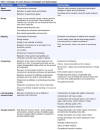

Tables 3a, 3b: Strategies for waste disposal: advantages and disadvantages
2.3 Waste management regulation
2.3.1 Roles and responsibilities
The roles and responsibilities of different authorities with respect to risk management is shown in Table 4.

Table 4: Roles and responsibilities of different authorities involved in waste management
2.3.2 Strategies and Plans
Waste Local Plan
This is a guide to the land use planning aspects of waste management. It is prepared by the county councils as a statutory requirement of the Town and Country Planning Act 1990. Together with the Minerals Local Plan and the District Local Plans, it makes up the county’s statutory Structure Plan, i.e. the overall development plan for the county. The statutory consultation procedure is laid down in the Town and Country Planning Act.
Waste Management Strategy
This is a non-statutory document, providing guidance for improving waste management practice and priorities in the county. It is the overall framework from which the more detailed Waste Local Plan is prepared. There is no statutory consultation procedure.
Progress with Waste Strategies and Local Plans in the South West are presented in Appendix 3.
2.4 Waste management in the South West
Most waste (approximately 85%) is dumped in landfill. Of the 6 million tonnes sent to landfill, approximately 3.5 million was biodegradable and over 2 million tonnes was inert or construction and demolition waste. Recycling rates vary across the region (Environment Agency 2000, data for 1998/99) and are shown in Figure 3.
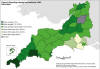
Figure 3: Recycling rates by local authority 1998. South West
A summary of waste management facilities in the South West is shown in Figure 4.

Figure 4: Waste management facilities in the South West in 1998-99


